The secret behind speakers who look effortless (and how you can too)
Until I met Maggie Lawrie, Public Speaking and Presentation Coach, I thought being a great speaker was a gift you were born with. A personality trait. Something some people excelled at and others, well, don’t give up the day job. Wrong!
Being a great orator or key note speaker is not a talent you’re born with. Fact. It’s something you have to work hard at.
And you know what? The fears of failure, embarrassing yourself, or not being good enough, that you’ve been letting hold you back from finding your voice for years are perfectly natural and extremely common.
As Head of Communication and Engagement at Marshall Aerospace and Defence Group, Maggie equipped me with the tools and techniques needed to conquer my stagefright and stand on a podium in front of a large audience in London to share the story of my award-winning internal communication programme - ‘Engaging for Success’.
The tailored coaching provided by Maggie was an investment in my personal and professional development that turned a potentially terrifying experience in a terrific one, and something I will always look back on with pride and a big smile.
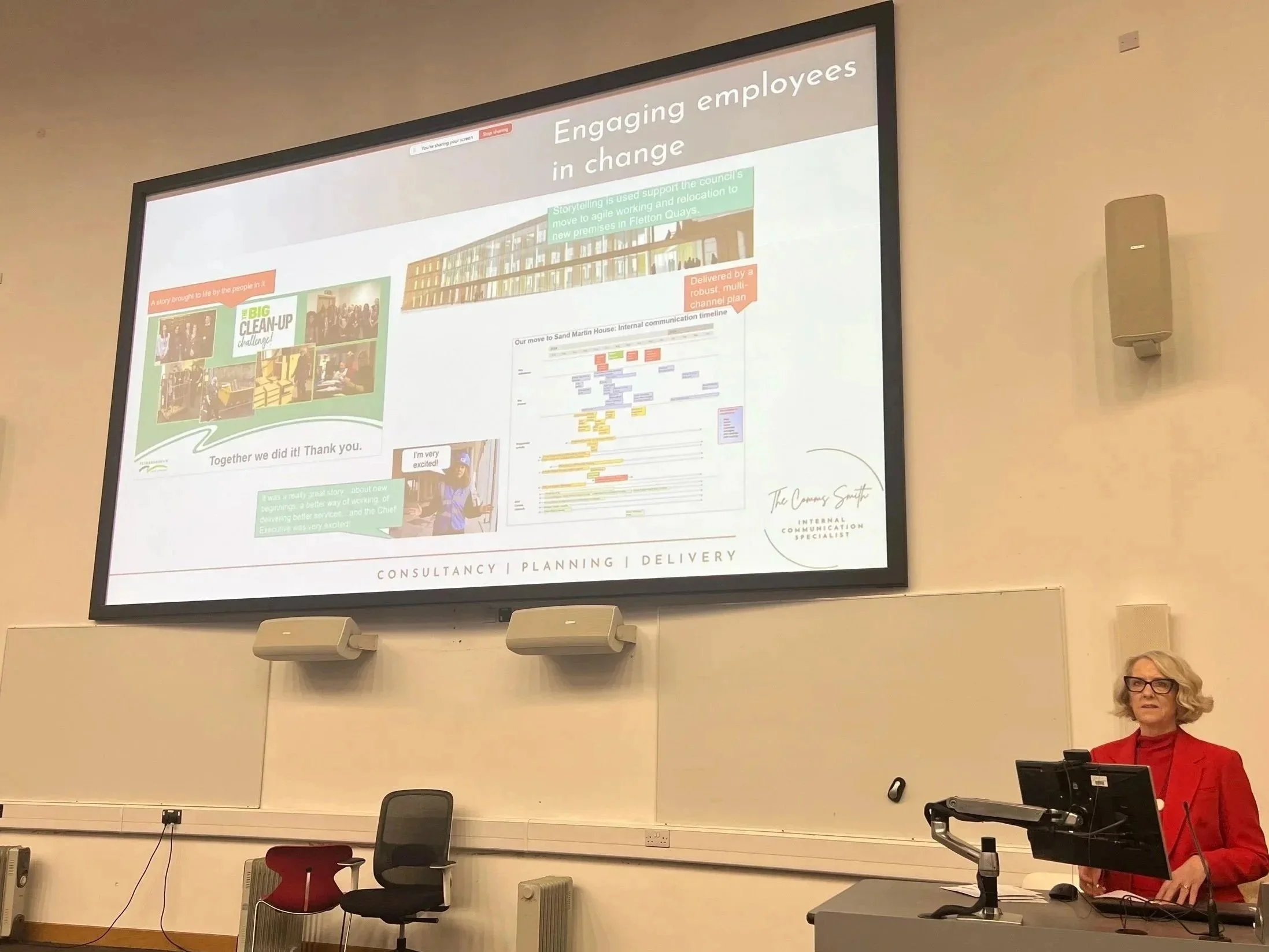
Maggie’s coaching helped me pitch a live brief to 150 first year digital marketing students at Anglia Ruskin University in February 2025.
Read the full story here.

Maggie helps people all over the world to have a transformational impact in all that they do. No set formulas or jargon. Just deep, tailored coaching that gets results.
In this Q&A style guest blog, she shares some of her secret sauce on what it takes to be a great speaker.
Who do you help?
A wide range of people come to me for help with a presentation or big speech. They can be quite junior and just starting out in their career; CEOs and extremely senior leaders who have signed up for a keynote speech at a leadership conference; or someone coming to the end of their career who wants to give something back by sharing their journey.
Whatever their initial reason for contacting me, they all have one thing in common - they want to make an impact and help people in some way.
Another thing they generally have in common is fear. They’ve likely compared themselves to someone, maybe a colleague, who appears to be a “naturally” great speaker. Or assumed that it’s a skill you’re born with and not something they can excel at. But guess what? Great speakers are made not born. They have invested heavily in developing their skillset. They’ve mastered the art of storytelling, practised their delivery, and developed confidence by building routines that calm their nerves and make their speech look effortless.
Why are so many of us scared of public speaking?
It’s complicated and very common, affecting more than 25% of people.
The most common fears are usually around:
Failure – not achieving a desired outcome, forgetting what to say
Embarrassment and judgement – worrying about looking stupid
Not being good enough – lacking the skills to give a good speech
Fears are often linked to childhood memories that are ingrained into our psyche, such as the time we were in a school play and forgot our lines. These memories can come back to haunt us as adults.
The good news is that, by unpacking what the problems are, we can develop a framework to overcome our fears and learn the necessary skills and techniques to become accomplished speakers.
Why do some people seem so confident on stage?
Usually, these people are highly trained and very well prepared. They know their stuff and they’ve rehearsed well.
I have never met anyone who can just stand up and deliver a great impromptu speech who hasn’t had some sort of training.
Many speakers rely on learned habits, not natural talent and that means it’s something we can all get better at.
Is there a standard approach to becoming a great speaker?
The first thing I do with a new client is find out what outcome they’re aiming for in their speech or presentation and what’s holding them back. My approach will depend on what they’re good at and what the gaps are.
Some people may be great storytellers when they’re having a coffee with friends and comfortable delivering small, fact-based presentations to their colleagues at work, but they don’t know how to fuse these two skills together.
We’ll work together to craft a talk that’s right for them. Then select three points that people need to know, narrowing this down to the one thing in the talk that they want people to remember above all else.
The most important thing for speakers to remember is that it’s about the audience not them. They need to know their audience. Is it made of engineers or entrepreneurs? The former will want facts, figures and maybe some detailed diagrams. The latter will want to know what the vision is.
What’s your advice for dealing with nerves?
Nerves often rear their ugly head when you’re focusing on yourself, rather than your audience.
There are various exercises and routines available to help. Some people like vocal exercises to help give their voice more brightness or warmth or control an initial wobble; some prefer a particular physical movement, like Tai Chi, to help them feel more centred; others like breathing exercises to help them slow down and not speak too fast.
It’s all about finding the tools and techniques that work for you. And remembering to focus on the audience.
Is there a way to quickly connect with your audience?
It’s a myth that for some people this is just easy. If it looks easy for a speaker it’s because they’ve rehearsed and tested their openings repeatedly, tweaking where necessary.
People like authenticity, so my advice is to be yourself. Imagine you’re sharing your story in a relaxed setting with a small group of friends.
One great technique is to start a speech off with a “Before I begin…” intro. For example, “Before I begin, can I just check that you’ve all had a chance to grab a coffee?” Or maybe there’s an elephant in the room that you can deal with.
One speaker I know always has a chair on stage and will start with, “Before I begin, would you mind if I just take my jacket off?” At which point he puts the jacket on the chair and loosens his tie. “Thank you, that’s so much better”, he’ll say.
It gives him a moment to pause - get his thoughts together, breathe a little, assess the audience and build a little rapport.
What if you suddenly lose your thread and freeze?
It happens – even to the best speakers. And they all do the same thing…pause, breathe and smile, before returning to the last point.
It can help to have some rhetorical questions in the bag that you can put out to the audience. While they’re answering it will take the onus off you for a moment and give you chance to slow your breathing and regroup.
Some people will own up and admit to losing their thread, even going so far as to ask the audience “where was I?”
What are your final tips?
✅Use no more than three key points to get your message across. Audiences rarely remember more.
✅You may want to invest in a colour analysis. This will help you understand what colours bring out the ‘wow’ factor on you.
✅Be human – authentic. Remember why you’re there and what you want the audience to take away from your speech.
Closing comments?
Small changes, like slowing down, create big improvements.
Confidence comes from practice, not talent.
Remember, even the best speakers still get nervous.