
How charity communications really work: first-hand insights from the sector
In 2024, I joined Safer off the Streets, the Peterborough homelessness charity, to provide voluntary communications consultancy.
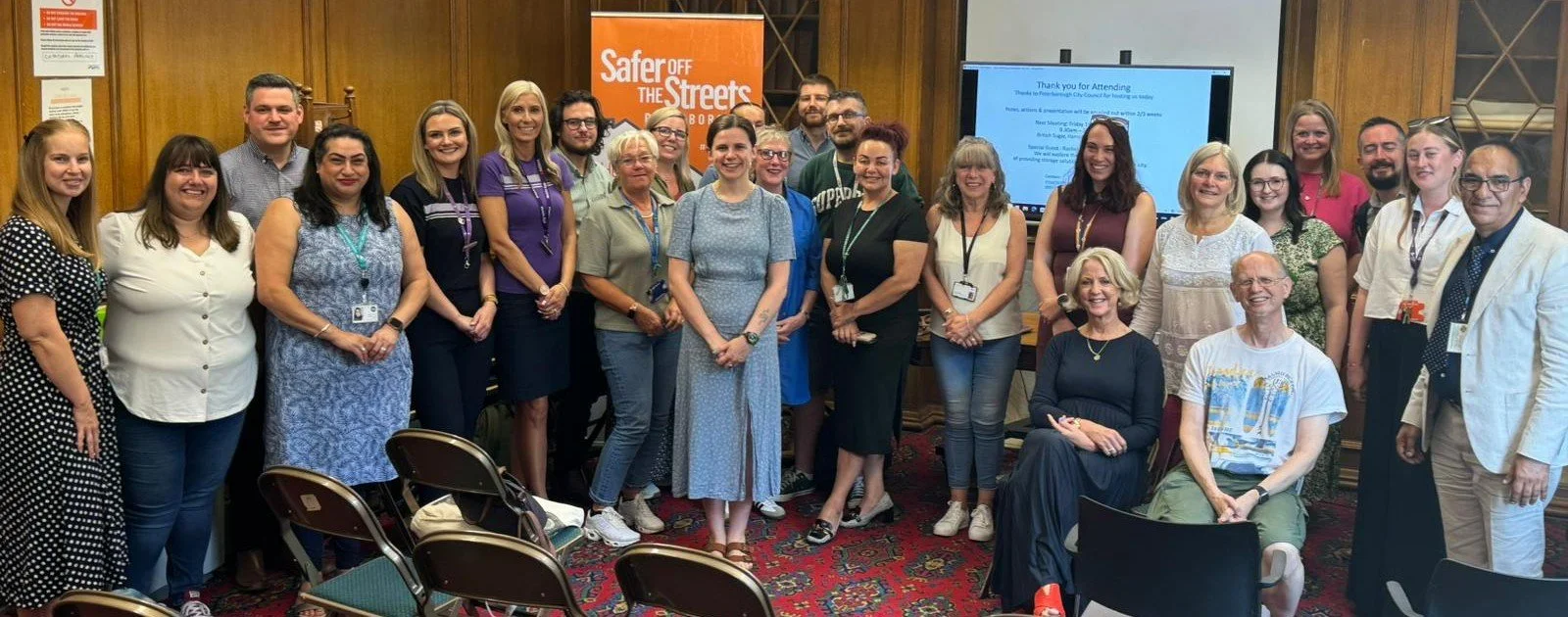
The Safer off the Streets partners’ meeting, July 2024
After years working with large corporations with sizeable budgets, the third sector and homelessness were both new territory to me.
To better understand how charity comms works, I reached out for advice and insights from the experts. A post on Vicki Marinker’s WhatsApp Comms Careers Supporters Club introduced me to Sadie Constable, who kindly shared what she’s learned as a leader in charity comms.
Putting people and purpose first

Sadie has over 20 years’ experience in charity comms and moved to her current role as Head of Communications, Marketing and Digital at RCVS Knowledge around 18 months ago.
As the charity partner to the Royal College of Veterinary Surgeons (RCVS), RCVS Knowledge is a small charity with a big heart, where everyone plays a part in connecting the charity’s work to the people it serves – the veterinary professionals who rely on trusted learning resources and evidence-based tools.
The state of the charity landscape
Although £15.4bn was donated in 2024, charities are now relying on donations from only 50% of people, down 58% in 2019 – equivalent to approximately four million fewer donors.
National charities receive the biggest proportion of donations – three quarters of donors said they gave at some of their donations to national charities in the last 12 months.
While an estimated 5.6 million people volunteered their time in 2024, around 3.9 million cancelled a regular payment to charity.
Source: Charities Aid Foundation - UK Giving Report 2025
Balancing funding challenges with purpose
RCVS Knowledge works with veterinary teams, animal owners and all those involved in animal health to advance the quality of veterinary care.
With fierce competition for funding and volunteers on a national scale, plus the challenge from RCVS Knowledge trustees to diversify their income streams, the task for comms and marketing means exploring new, sustainable income streams, such as sponsorships and revenue-generating events, using marketing not just to promote, but to serve the charity’s future in the long-term.
“Like many charities, RCVS Knowledge operates with a deep sense of accountability,” explains Sadie. “We’re lucky to receive some of our funding from the College but are acutely aware that every pound must serve our mission, so communication must be focused and aligned with our purpose.”
Listening first: Sadie’s approach to effective communication
With this mission at the heart of her vision for the future, Sadie’s priority upon joining was to embark on a company-wide listening programme to help her really get under the skin of how the charity works.
“As a comms professional, one of the most valuable investments you can make is to take the time to get to know your colleagues and stakeholders, what they’re wedded to and why,” says Sadie. “Focus on building relationships with your peers. Be curious. Listen before jumping in with suggestions for improvements. Remember, there’s usually a reason things are done the way they are.”
Turning insights into impact
The insights and data gained from this exercise led to a restructure of Sadie’s team and a renewed focus on how they can make the most impact.
“Effective communication isn’t just about sharing information,” she says, “it’s about keeping people and purpose aligned.”
This starts at the top, with the CEO and senior leadership team consulting with the business to reach mutual consensus on key decisions. Weekly meetings, Teams and email help collaboration by keeping everyone connected and focused on priorities. Externally, clinical leads act as ambassadors representing RCVS Knowledge across the veterinary profession.
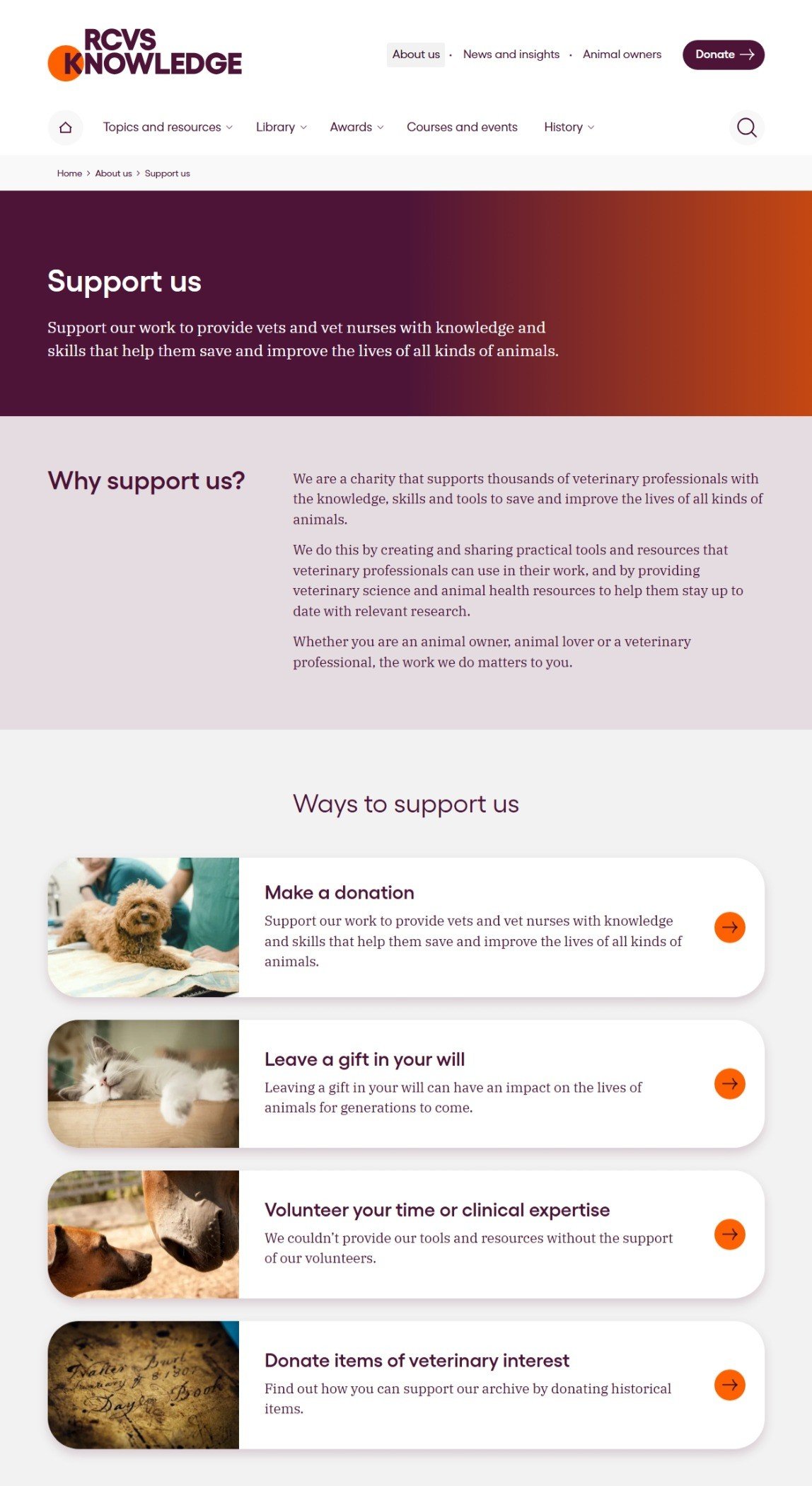
An example of this connectivity in practice is the launch of the new RCVS Knowledge website, which has gone live this week.
“This has been a big, complex project requiring collaboration and input across whole the charity throughout most of 2025,” explains Sadie.
“The end result is a much more engaging and positive digital experience that ensures our veterinary professionals can quickly find what they need from our vast library of digital resources, online learning, and best practice.”
Measuring what matters
Reflecting on progress one and a half years into her role, Sadie is aware that impact measurement is key to the charity’s future. But while the team is capturing a lot of data they’re not yet seeing if, or how, their efforts are impacting the behavioural change they need to achieve their goals.
“Our new website is central to this by providing key data to support our growth, reach, and impact - essential for staying true to our mission: supporting better care for animals everywhere,” she says.
Reading and more resources
🔍Learn more about the work of RCVS Knowledge here.
🎙️Listen to The Peterborough Podcast where Anna Lee, Chair of Safer off the Streets, talks to John Baker about the work they are doing to help reduce homelessness in the Peterborough.
📘Joe Barrell’s excellent book, ‘Make it Matter’ is targeted to the charity sector but I would recommend for all comms professionals.
🤝If you’re a comms professional seeking a great support network, follow this link to join Vicki Marinker’s networking groups.
🧭National Council for Voluntary Organisations – Charity communication guidance: https://www.ncvo.org.uk
📊Charities Aid Foundation – UK Giving Report 2025: https://www.cafonline.org
💬CharityComms – Best practice for charity communicators: https://www.charitycomms.org.uk
💻📚 Charity Digital – Reading and practical digital resources for charities and non-profits - Charity Digital - Home